The Empty Injector: Disposing of GLP-1 Pens Safely and Discreetly in the UK
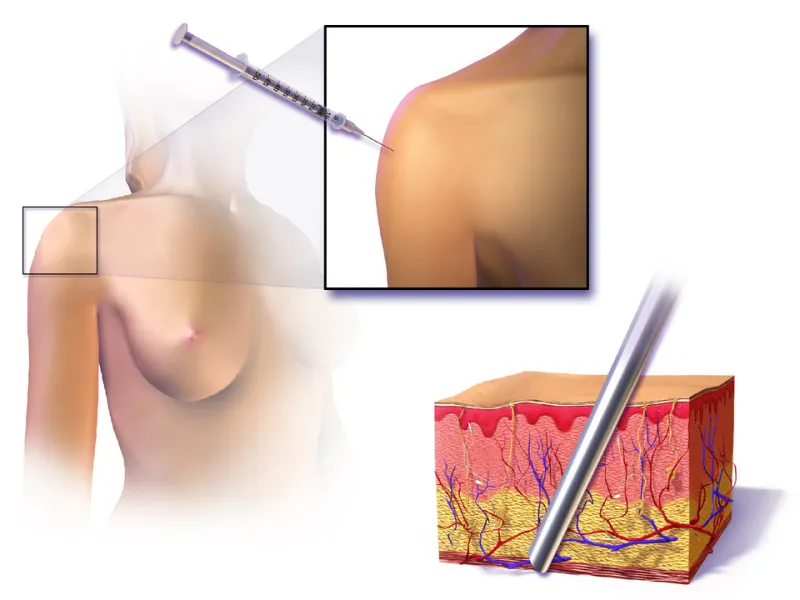
Photo: BruceBlaus, CC BY-SA 4.0, via Wikimedia Commons
The last step of treatment is not the last dose
For many people starting a GLP-1 medicine such as Wegovy or Mounjaro, the first appointment is dominated by injection technique, side effects and expectations. The final practical question — what to do with the pen once it is empty — often arrives later, sometimes after several months of treatment. In 2026, disposal arrangements remain uneven across the UK, and patients on private prescriptions may receive little more than a manufacturer's leaflet.
That gap matters. A used GLP-1 pen is not a crisp packet. It contains a needle, residual medicine and a device that should be handled as clinical waste rather than placed in a kitchen bin. The good news is that safe disposal is straightforward once the route is known. The better news is that it can be discreet as well.
Why an empty pen does not belong in household waste
A used injection pen presents a puncture risk to anyone who handles it after it leaves the home — waste collectors, recycling sorters, children, pets or cleaners. Even with the outer cap replaced, the needle remains a sharp. Residual medicine may also be present in the cartridge, and the pen itself is a medicine-containing device.
In the UK, used sharps from home treatment are generally treated as clinical waste. The exact rules are administered locally, but the principle is consistent: needles and sharp medicine devices should be collected in a rigid, purpose-made sharps container and returned through an appropriate route. Placing them loose in general waste or recycling is not considered safe practice.
The risk is not theoretical. Needlestick injuries can cause anxiety, blood testing and time off work for the person injured. For the patient, the greater risk may be social: a visible sharps bin in a shared bathroom can invite questions that a person is not ready to answer. Safe disposal and discreet disposal therefore need to be planned together.
Storing used pens before they leave the house
The period between an injection and disposal is where most household accidents occur. A used pen should not be left on a bedside table, in a washbag or loose in a bathroom drawer. The needle should be handled according to the patient information leaflet, and the pen should be placed in a sharps container as soon as is practical.
A purpose-made sharps bin is the safest option. These are usually small, rigid containers with a secure lid and a narrow opening. A one-litre bin is adequate for most GLP-1 patients and fits inside a locked cabinet or a high cupboard. If a bin has not yet been obtained, the used pen should be kept capped, in its original box, out of reach of children and pets, and transferred to a sharps container as soon as one is available. This is a short-term measure, not a storage solution.
Labels matter. Writing the start date on the side of the bin helps the patient know when it is approaching the fill line. Most containers should be sealed and returned when about three-quarters full, following the manufacturer's instructions. They should not be overfilled, and they should never be decanted into another container.
Where to obtain a sharps bin
Patients on NHS weight-management pathways are often given a sharps bin by the clinic, sometimes alongside the first prescription. If one is not offered, it is reasonable to ask at the prescribing appointment. GP practices may also supply small bins, although this varies by surgery and health board.
Community pharmacies are another common source. Some sell small sharps containers over the counter, typically for a modest sum, while others provide them only as part of a local scheme. Private patients should ask their online prescriber or dispensing pharmacy whether a bin is included; many are not, and the patient is expected to buy one before the first injection.
Local councils sometimes provide sharps bins through clinical waste services, but eligibility and charges differ. In some areas, a referral from a GP or district nurse is required. A telephone call to the council's waste team is usually more reliable than a website search, particularly where home treatment is involved.
Who takes the full bin back
The return route is the part of disposal most likely to stall. In the UK, there is no single national take-back scheme for GLP-1 pens. Arrangements depend on the pharmacy, the council and the patient's prescribing route.
Some community pharmacies accept full sharps bins from patients, but many do not, and those that do may limit the service to their own customers. NHS clinics may accept bins at follow-up appointments or direct patients to a local collection point. Council clinical waste collections can collect from the home, but these services often run on a booked schedule and may charge for private patients. Private clinics vary widely: some arrange courier collection, some accept returns at appointments, and some leave the responsibility entirely with the patient.
The practical advice is to ask before the bin is full. A short question at the pharmacy counter — 'Do you accept full sharps bins from patients on home injections?' — will establish the local position. If the answer is no, the council waste team is the next call. Patients should avoid assuming that a bin put out with household waste will be collected safely, and they should never place a sealed sharps container in a recycling bin.
Managing disposal in a shared home
Shared houses, flatshares and multi-generational homes add a layer of privacy. A sharps bin in a communal bathroom is not always appropriate, and a used pen left in a shared kitchen bin is a safety risk. A lockable storage box kept in the patient's own room is a reasonable compromise: it keeps the container away from children and visitors while allowing the patient to control who knows about treatment.
Discretion does not require secrecy from everyone. If a trusted housemate or family member is likely to encounter the bin, a brief explanation — 'This is for my injections; please leave it alone' — is usually enough. For patients who prefer not to disclose, a small bin in a zipped washbag or a locked bedside drawer can work, provided it remains rigid and upright.
Transport is the other consideration. A full bin should be sealed, placed in a bag and taken directly to the return point. It should not be left in a car boot for days or carried loose in a handbag. If the return point is a pharmacy, a quiet weekday morning is often less busy than a Saturday.
A simple disposal checklist for 2026
- Read the patient information leaflet for the specific pen before the first injection.
- Obtain a purpose-made sharps container before starting treatment, not after the first pen is empty.
- Label the container with the start date.
- Handle needles according to the leaflet; avoid recapping by hand where instructions advise against it.
- Keep the container upright, closed and out of reach of children and pets.
- Seal and return the container when it is about three-quarters full.
- Confirm the return route with the pharmacy, clinic or council before the container is full.
- Never place loose pens, needles or sealed sharps bins in household waste or recycling.
- In a shared home, store the container privately and transport it discreetly.
- If a needlestick injury occurs, wash the area and seek urgent medical advice.
What to do if something goes wrong
A needlestick injury from a used pen should be treated as a medical incident. The wound should be washed with soap and water, and advice should be sought promptly from a GP, NHS 111 or an urgent treatment centre. The incident should also be reported to the prescribing clinic, both for the patient's safety and to improve local disposal advice.
If a used pen is found loose in household waste, it should be handled with gloves or tongs, placed in a rigid container and returned through the correct route. It should not be pushed further into a bin bag or left for a waste collector to discover.
The quiet responsibility of the final click
GLP-1 treatment is often described in terms of appetite, weight and clinical outcomes. Disposal is less discussed, but it is part of the same duty of care. A patient who has learned to inject safely can also learn to retire a pen safely. In 2026, the routes are not always obvious, but they exist: the clinic, the pharmacy, the council and, where necessary, a small locked box in a spare room.