When the Weekly Shop No Longer Fits: A UK Kitchen Audit for New GLP-1 Patients
There is a moment, usually around week three or four of GLP-1 treatment, when many patients open the kitchen cupboards and realise they are standing in a museum of a former life. The multi-buy crisps. The family packs of chicken thighs from the cash-and-carry. The freezer drawers groaning with batch-cooked lasagne labelled in marker pen. All of it bought with the best intentions, and none of it matching the appetite you now have.
This mismatch is not trivial. Left unaddressed, a kitchen built for a larger appetite can quietly undermine treatment — encouraging grazing, waste, or in some cases, poor nutrition at exactly the time your body needs quality protein and nutrients most. A deliberate kitchen audit is one of the simplest, most practical steps a patient can take.
Why the Kitchen Matters More Than You Think
GLP-1 medications such as semaglutide and tirzepatide work substantially by reducing appetite and slowing gastric emptying. Patients typically eat smaller quantities, feel full sooner, and often find rich or fatty foods less appealing. Yet the environment around you — the visible biscuit tin, the economy-sized pasta bags — was assembled by and for the person you were before the prescription.
Behavioural research has long shown that visibility drives consumption. If the first thing you see at 6pm is a family-size bag of tortilla chips, that is what you will reach for, even at reduced appetite. Restructuring the kitchen is not about deprivation; it is about making the nutritious, portion-appropriate choice the easy one.
The Freezer First: Facing the Batch-Cook Backlog
Start with the freezer, because it holds the largest volume and the oldest habits. Remove everything and sort it into three groups:
- Protein-forward items — fish fillets, lean mince, chicken breast, frozen edamame. These stay. They align well with a protein-first eating pattern that helps preserve muscle mass during weight loss.
- Family-size composite meals — the shepherd's pies and curries. Portion these into single servings before returning them, or share them with neighbours and family. A defrosted portion eaten over two days is better than a tray baked and binned.
- Impulse purchases — party food, garlic bread, ice cream tubs. If they will not be eaten sensibly, pass them on rather than keeping them as a standing test of willpower.
If you invested in a vacuum sealer or bulk-buy deals at Costco or Booker, there is no shame in scaling down. A smaller chest freezer, or even drawer dividers labelled by week, can prevent the 'bottom of the freezer' phenomenon where food expires unseen.
Cupboards and Worktops: The Visibility Reset
Next, tackle dry goods. Unopened tins, pasta, rice and cereals in good condition and within date can be donated — most supermarkets now host collection points for the Trussell Trust, and local food banks and community fridges welcome non-perishable donations. School food banks and church collections are further options, particularly around harvest festival and Christmas.
Then apply the visibility rule to what remains:
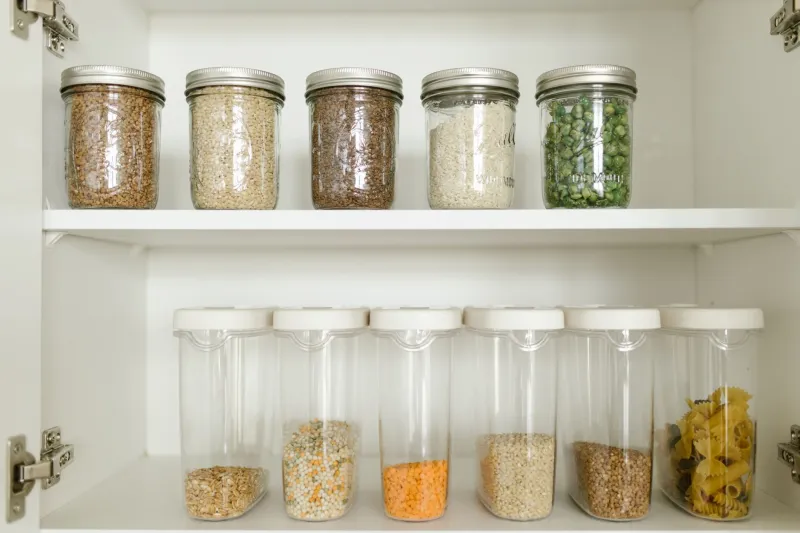
- Move protein-rich staples — tinned fish, beans, lentils, eggs (stored appropriately) — to eye level.
- Relocate sweets and snacks to opaque containers on high shelves, or out of the kitchen entirely if you share the home with people who do not need the restriction.
- Clear worktops of biscuit tins and fruit bowls stacked with packaged treats; a fruit bowl is fine, but keep it fruit-only.
The Fridge: Your New Command Centre
With a suppressed appetite, every bite counts nutritionally, so the fridge should be the best-organised zone in the kitchen. Dedicate a shelf to prepared protein: boiled eggs, cooked chicken, Greek yoghurt pots, cottage cheese, hummus. Use clear containers so you can see options at a glance — decision fatigue at mealtimes is real when hunger cues are muted.
Check dates honestly. With smaller appetites, milk and fresh produce spoil more often; buying little and often from a local greengrocer or mini-shop may actually serve you better than the big weekly shop.
Restructuring the Shopping List
The traditional British 'big shop' — trolley loaded for a fortnight — is poorly suited to GLP-1 treatment. Consider instead:
- Smaller, more frequent shops — two or three trips a week, or a short online order, reduces waste and temptation.
- A protein-first list template — anchor each meal around a protein source, then add vegetables and a modest carbohydrate portion.
- Downgraded pack sizes — yes, the per-kilo price is worse, but the per-meal cost of food you actually eat is often lower. Do not let multi-buy offers write cheques your appetite cannot cash.
Without Punishing Yourself
Finally, a note on tone. Decluttering should feel like an act of self-care, not penance. Keep a small selection of things you genuinely enjoy — good cheese, quality dark chocolate, a nice olive oil. A kitchen that supports your treatment can still be a kitchen that gives pleasure. The goal is alignment: a home that matches the person you are becoming, not the one the freezer remembers.