Reading the Pen: A UK Patient's Guide to Verifying a Weight-Loss Injection
A prescription weight-loss injection is a medicine, not a consumer gadget. That distinction matters most when a pen arrives in the post and the patient is left to judge whether the box, the label and the pharmacy paperwork are what they should be. Counterfeit and illegally supplied GLP-1 products have appeared in several countries in recent years, and UK patients are not immune to the risk. The aim of this guide is not to turn patients into amateur investigators. It is to set out what legitimate supply should look like, where the warning signs tend to cluster, and why a visual check alone can never provide certainty.
Why counterfeit pens enter the weight-loss market
Demand for GLP-1 medicines has risen sharply, and so has the gap between what some patients want and what regulated services can supply. That gap creates an opening for sellers who trade outside the UK prescription system. The products may be presented as authentic, as imported stock, or as a cheaper alternative to a private clinic. Some are outright counterfeits; others are legitimate medicines diverted from another market, stored incorrectly, or supplied without the assessment that a prescription-only medicine requires.
The clinical risk is not theoretical. A pen may contain the wrong active ingredient, an unknown concentration, or a solution that has not been kept under appropriate conditions. It may also carry contamination risks that are impossible to see. For a patient injecting at home, there is no way to test for those problems by looking at the packaging.
What legitimate UK supply should involve
In the UK, GLP-1 medicines licensed for weight management are prescription-only medicines. A legitimate route therefore begins with an assessment by a qualified prescriber and ends with dispensing by a pharmacy registered with the General Pharmaceutical Council. For online services, that means a consultation process, checks on suitability, and a named prescriber who takes responsibility for the decision. A seller who will post a pen after a short questionnaire and a payment, with no meaningful clinical review, is not operating a normal prescription service.
The dispensing pharmacy should be identifiable. Its name, address and GPhC registration number should appear on the paperwork or be readily available. The prescription label should carry the patient's details, the medicine name and strength, directions for use, the date of dispensing and the pharmacy's details. The outer carton should show a batch number and expiry date, and the pen inside should correspond to the carton. The patient information leaflet should be present and in English, with clear instructions for storage and use.
These features are reassuring, but they are not proof of authenticity on their own. Counterfeiters can copy cartons, labels and leaflets. A batch number can be cloned. A tamper seal can be imitated. What legitimate supply provides is a chain of accountability: a prescriber, a registered pharmacy, a wholesaler and a manufacturer, each of which can be asked to account for the product.
Batch numbers, packaging and the limits of inspection
Patients often ask what a fake pen looks like. The honest answer is that there is no single visual signature. Poor print quality, spelling errors, mismatched batch numbers, a damaged tamper seal or a leaflet in the wrong language are all reasons to stop and seek advice. A pen whose label does not match the carton, or whose packaging appears to have been opened and resealed, should not be used.
But the absence of those signs does not guarantee that a pen is genuine. Modern counterfeits can be convincing, and some illegally supplied products are genuine medicines that have been diverted or stored badly. Patients should also be wary of relying on features that vary between products and markets, such as holograms or particular security stickers. These can create false confidence when the underlying supply route is unknown.
The practical rule is simple: if something about the packaging, the paperwork or the seller does not fit, do not inject. Keep the product and its packaging, and ask a pharmacist or the original prescriber to review it. A legitimate pharmacy should be able to explain where the stock came from and confirm the batch details.
Price, route and the red flags of illegal supply
Unusually low prices are a warning sign, not a bargain. GLP-1 medicines are not cheap to manufacture, store and distribute, and a legitimate UK pharmacy has to recover the cost of prescribing, dispensing, cold-chain handling and regulatory compliance. Offers that undercut the market by a wide margin, especially when combined with pressure to pay by bank transfer or to act quickly, deserve scepticism.
Other red flags include sellers who operate only through social media or messaging apps, who cannot provide a GPhC-registered pharmacy address, who supply without a prescription, or who describe the product as a research chemical or a generic slimming aid. Patients should also be cautious about overseas websites that promise delivery without a UK prescriber, and about anyone who offers to source a pen from a friend or a gym contact. These routes bypass the safeguards that exist for a reason.
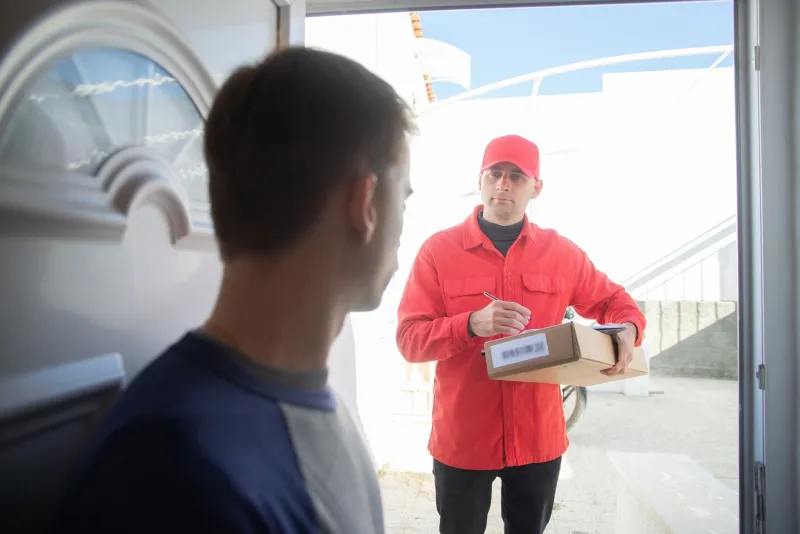
Delivery conditions matter as well. GLP-1 pens usually have specific storage requirements before first use, and a legitimate pharmacy will dispatch them with appropriate packaging and instructions. A pen that arrives warm, poorly packed or without any temperature or handling information should be queried before use.
Reporting a suspect product
If a patient suspects that a pen is counterfeit or illegally supplied, the first step is to stop using it. The second is to report it. In the UK, suspected counterfeit or defective medicines can be reported to the Medicines and Healthcare products Regulatory Agency through its Yellow Card scheme or its enforcement routes. The MHRA also works with Trading Standards and the police on medicines enforcement. Patients should keep the packaging, the pen and any paperwork, and avoid returning the product to the seller before reporting it.
If a dose has already been taken and the patient feels unwell, they should seek urgent medical advice and mention the product and the batch number. A pharmacist can also advise on disposal once the product has been reported.
The safest check is the route, not the label
No patient can verify a pen with complete certainty from the outside. The stronger safeguard is the route by which it was prescribed and dispensed. A regulated UK prescriber, a registered pharmacy and a clear clinical assessment are not bureaucratic extras; they are the system that makes a counterfeit pen less likely to reach a patient in the first place. When a product arrives through that system, the packaging checks are a final layer of assurance. When it arrives through a social media seller or an unexplained overseas website, the packaging is the only layer, and that is not enough.